Traffic Incident Management
OUR MISSION
To provide a systematic, planned, and coordinated multi-disciplinary approach to detect, respond and clear crashes to restore traffic capacity as safely and quickly as possible.
OUR VISION
To enhance motorist and responder safety during traffic emergencies by creating and sustaining partnerships with law enforcement, fire and emergency medical services, transportation and environmental agencies, towing and recovery, drivers, the media, the insurance industry and others.
News & Events
UPDATED DIVERSION PLANS
The Connecticut Department of Transportation along with members of the Greater Hartford TIM Coalition have completed updating of diversion plans for several routes across the State.
A set of detailed diversion plans for major state highways and state routes across Connecticut can be found at Diversion Plans.
These plans are for emergency use only and modifications may be made by contacting Aidan Neely. Please note these plans are not emergency evacuation routes, rather, are being made available to assist local and state officials during short-term closures of less than three days.
For More Information
Please contact aidan.neely@ct.gov for any questions, comments or concerns about these diversion plans.
November 17-21, 2025
"Safety starts with you, slow down and move over”
The 2025 theme highlights that safety is a collective effort, requiring vigilance from both drivers and responders. It is a shared responsibility to save lives on our roadways.
The annual initiative, in its tenth year, emphasizes traffic incident management (TIM) practices and the importance of driver awareness to ensure the safety of both roadway responders and the traveling public.
251 emergency responders were struck and killed by a vehicle in the five-year period (2019–2023).
“Move Over” laws: All 50 states and Washington, D.C. have “Move Over” laws that require drivers to slow down and/or change lanes when approaching emergency vehicles with flashing lights. Public awareness campaigns, like those from the National Highway Traffic Safety Administration (NHTSA), promote compliance with these laws.
What Can We Do To Make Everyone Safe On Our Roads?
Driver Pledge:
- Slow Down: When you see emergency vehicles or any stationary vehicle on the side of the road, reduce your speed.
- Move Over: If safe to do so, move over one lane away from the incident. If you cannot move over, slow down and proceed with caution. In Connecticut, the law requires you to move over for all vehicles with flashing or hazard lights, such as: law enforcement, EMS, fire, highway maintenance, construction, utility, trash, and disabled vehicles.
- Stay Alert: Put away distractions like your phone to give your full attention to the road and the incident scene.
Responder Pledge:
- Teach: You can teach safe driving behaviors to the public, such as how to comply with Move Over laws.
- Share: Create social media messages or videos explaining the risks you take when working roadside and the importance of driver actions for your safety.
- Train: Training ensures that responders use the safest and most effective procedures at incident scenes. The Traffic Incident Management (TIM) training program trains police, fire, EMS, and other responders on how to safely and quickly manage incidents. The training emphasizes communication, vehicle positioning, scene safety, and traffic management.
Automated Traffic Enforcement Safety Device Program
The purpose of the Automated Traffic Enforcement Safety Device (ATESD) Program is to empower Connecticut municipalities to improve roadway and pedestrian safety within their communities. ATESD capture images of drivers committing traffic violations, such as speeding and running through red lights. The objective of this program is to improve public safety, change driver behavior, and save lives.
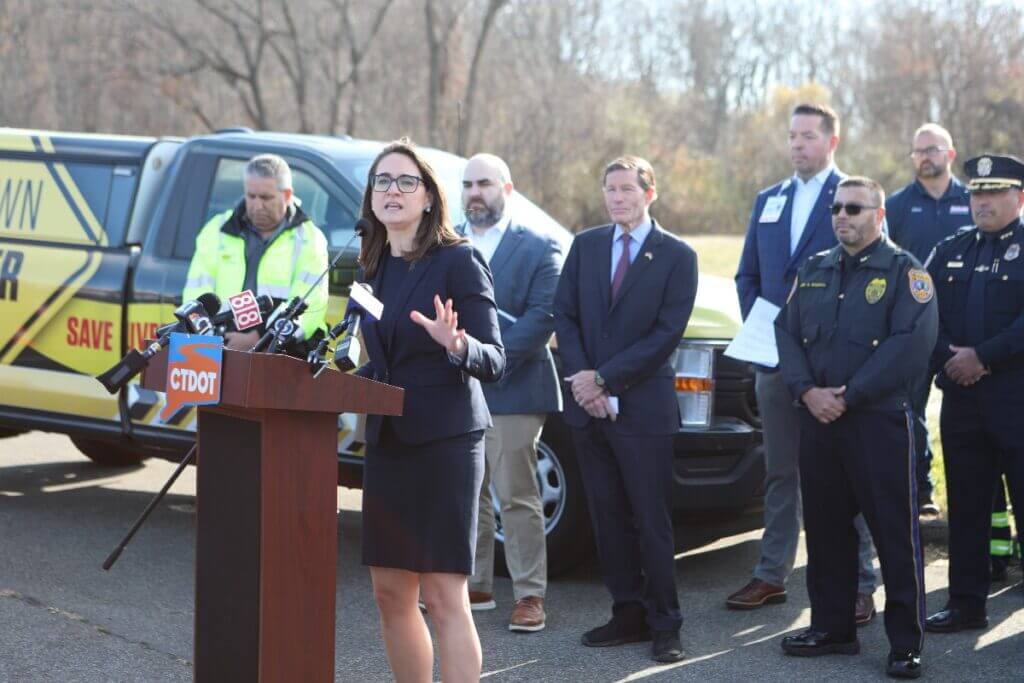
Nation’s Top Highway Official Calls for Safety of Emergency Responders
“Crash responders put their lives on the line every day, committing courageous acts of service to keep us safe, respond to crashes, and protect others around us,” said Acting Federal Highway Administrator Kristin White.
“Safety is FHWA’s north star, and we work closely with federal, state and local partners to ensure we slow down, move over, and remain alert so we can save lives when crashes occur and protect the injured and our crash responders.”
During Crash Responder Safety Week an event was held in Connecticut (November 18, 2024), where Acting Administrator White joined Connecticut DOT Commissioner Garrett Eucalitto, U.S. Senator Richard Blumenthal and representatives from state and local police departments along with emergency crash responders to highlight National Crash Responder Safety Week and USDOT’s commitment to improving safety on our nation’s roads.
Slow Down Move Over
Connecticut’s “Move Over” law is one of the strongest in the country. It was enacted in 2009 and amended in 2017 to include ANY vehicle along the side of the road, not just emergency vehicles.
The law states that drivers approaching vehicles on the shoulder or in a breakdown lane must immediately reduce their speed to a reasonable level. If on a multi-land roadway, the driver must also move over one lane if it’s reasonable or safe to do so.
Slow Down Move Over: Real Lives Campaign
Enter description text here. Lorem ipsum dolor sit amet, consectetur adipiscing. Quo incidunt ullamco.
Traffic Incident Management Committee
Traffic Incident Management Committees are undeniably valuable. Learn more about their value with this video.
The Capitol Region Council of Governments established a Greater Hartford Traffic Incident Management (TIM) Coalition in 2018. The Coalition members include both public and private stakeholders involved in handling traffic crashes on our roadways in the region. The Coalition will strive to strengthen the role of TIM in the responder community, increase the safety for motorized and non-motorized users, and promote efficient transportation system management and operation along the state’s highway system.
For the Greater Hartford Traffic Incident Management Coalition meeting information, newsletters and other documents click the button below.
Traffic Incident Management Responder Training
This program is designed by responders, for responders, to achieve the National Unified Goals of:
- Responder Safety
- Safe, Quick Clearance
- Prompt, Reliable Communications
Who Should Attend?
Professionals in:
- Communications
- Emergency Management
- EMS
- Fire/Rescue
- Law Enforcement
- Towing and Recovery
- Transportation/Public Works
Key topics include the following:
- Safe Vehicle Positioning & Scene Safety
- Incident Command System for TIM
- Quick Clearance Strategies
- Managing Hazardous Materials & Crash Investigations
Certified Police Officers can earn POST training credits. EMR, EMT and Paramedics can receive 6 CME hours. Everyone stands to gain a National TIM Responder Training Completion Certificate.
The course is held from 8:30am to 3:15pm at CTDOT Headquarters. All training dates as well as registration can be found by clicking the buttons below.
For additional information contact Aidan Neely at aidan.neely@ct.gov or (860) 594-3454
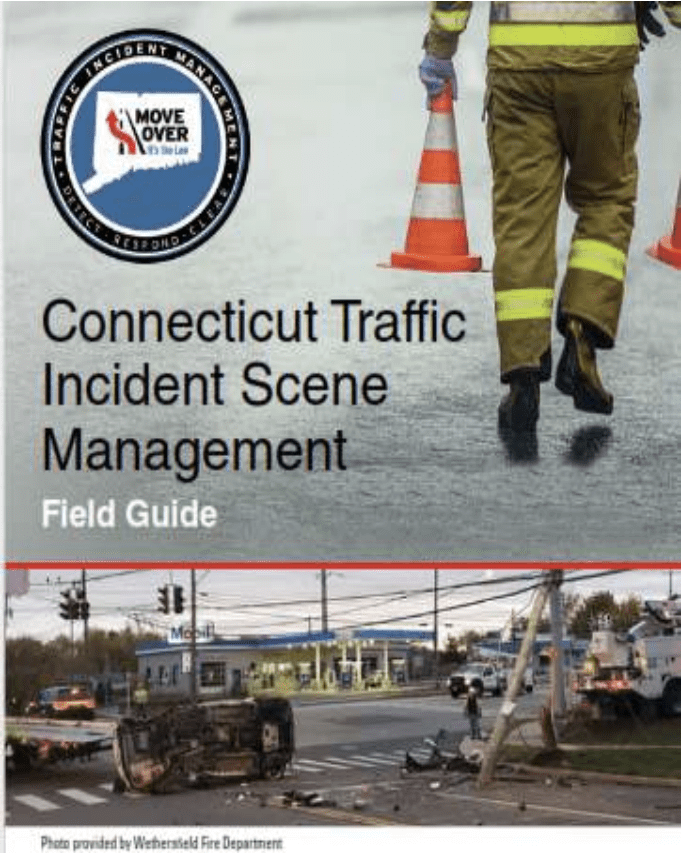
Connecticut Traffic Incident Scene Management Guidebook
The Greater Hartford TIM Coalition has developed a TIM field guide for scene management. It is currently being distributed to emergency responder organizations across the State.
A presentation to provide guidebook information is available as well. Contact Terri Thompson at tthompson@crcogct.org.
CT Enhanced Accident Response Plan
The report was published December 2016 by the Connecticut Department of Transportation. The purpose of the report is to present to the joint standing committees of the General Assembly, the current status and future plans of Connecticut Enhanced Accident Response Plan (EARP); as mandated by Section 164 of 2015 CT Public Act 15-5.
Regional Emergency Support Function 1
The Regional ESF (RESF) facilitates communication and coordinates among regional jurisdictions and agencies concerning transportation issues and activities during a major disaster or incident. RESF-1 personnel focus on disruptions of the regional transportation system requiring inter-jurisdictional coordination and information sharing. Transportation disruptions can occur as a result of direct impacts upon the transportation infrastructure (e.g. disasters), major traffic incidents or from surges in requirements placed on the system by emergencies in other functional areas.
Public Service Announcements
Enter description text here. Lorem ipsum dolor sit amet, consectetur adipiscing. Quo incidunt ullamco.
Leave Your Phone Alone
Slow Down Move Over
Move It
Drivers: Do You Know What to Do?
It’s No Picnic Out Here
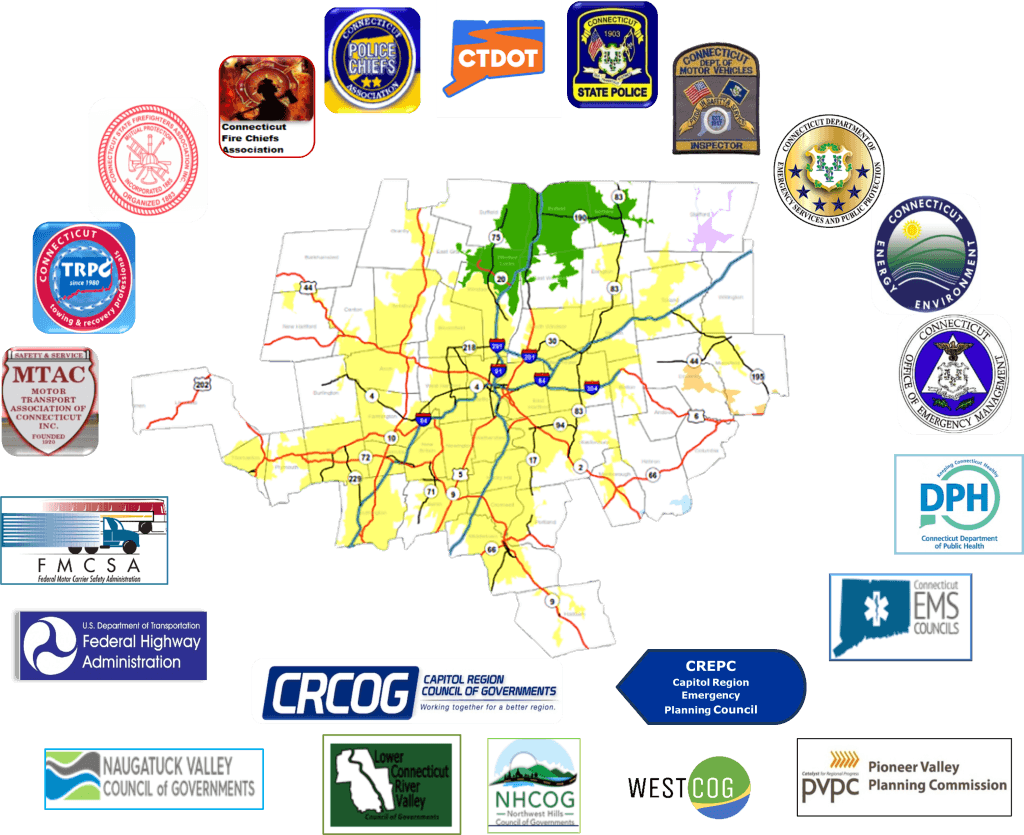
Our Partners
Enter description text here. Lorem ipsum dolor sit amet, consectetur adipiscing. Quo incidunt ullamco.
Other Resources
Enter description text here. Lorem ipsum dolor sit amet, consectetur adipiscing. Quo incidunt ullamco.