Plan of Conservation and Development (POCD)
Overview (What is a POCD)
The Capitol Region offers a high quality of life with a variety of neighborhood types, strong community connections, cultural destinations, and a range of job opportunities. The region is characterized by striking natural features and landscapes – from the lowlands along the Connecticut River to trap rock ridges.
The CRCOG Plan of Conservation and Development promotes a “Connected Region” – one where residents are connected to each other, to jobs, to nature, and to their community. Working with our communities we can create a region of choice, belonging, and opportunity. Organized into five key themes, this plan paves the way for a thriving Capitol Region while recognizing that solutions must be tailored. Approaches for the region’s largest communities will differ from those of smaller communities.
Explore the plan to learn more about actions that the region, cities and towns, and others can take regarding our natural landscapes, climate change, the economy, governance, transportation, housing, and more.
Read The Plan Here
Introduction to the Plan
This Plan of Conservation and Development (POCD) openly discusses regional challenges, celebrates progress, and provides strategies and actions to build a stronger region. The Capitol Region Plan of Conservation and Development promotes a “Connected Region” and a more equitable region. The plan focuses on creating a region of choice, belonging, and opportunity.
Access the full plan as a pdf here.
Dive into the Plan
The Plan Break Down
Each chapter has been broken down into their own sections to quickly and easily access the action items in the plan.
Open each tab below to review the strategies and actions under each of the plan’s themed goals.
Cultivate a Green & Resilient Future
Human activity causes climate change and puts pressure on natural resources throughout the region. Forest cover, farmland, and water quality have decreased over the past century. And more recently, severe storms, extreme heat, and intense floods have exposed vulnerabilities in both our built and social infrastructure. Despite challenges, the region is home to many natural assets like the Connecticut River, an ample supply of clean drinking water, and hundreds of acres of preserved green and open spaces.
Development must be balanced with conservation in order to protect our region’s natural resources and landscapes. The plan outlines ways to achieve this balance by connecting people to open space, integrating nature into the built environment, and creating a sustainable regional food system, among other topics. Climate mitigation and adaptation strategies are discussed at length, with greenhouse gas emissions reduction being an integral step towards climate resilience.
1. Protect our Region’s natural resources and landscapes and minimize impacts from development and human activity.
Strategy 1: Increase the Region’s capacity to protect natural resources.
- Guide development to areas best suited for development.
- Encourage the Region’s cities and towns to adopt best practices to minimize impacts when development occurs.
- Monitor environmental-related laws and regulations, understand challenges and gaps in staff and volunteer expertise at the local level, and seek regional approaches to addressing gaps.
- Work with other COGs and conservation advocates to understand if existing tools might need to be updated to effectively protect the Region’s natural resources.
- Convene, or help convene, regional meetings for municipal conservation commissions so they can exchange ideas and experiences.
Strategy 2: Improve water quality of the Connecticut River, and the Region’s other rivers, streams, waterbodies, and groundwater.
- Protect buffers along rivers, streams, and waterbodies where feasible.
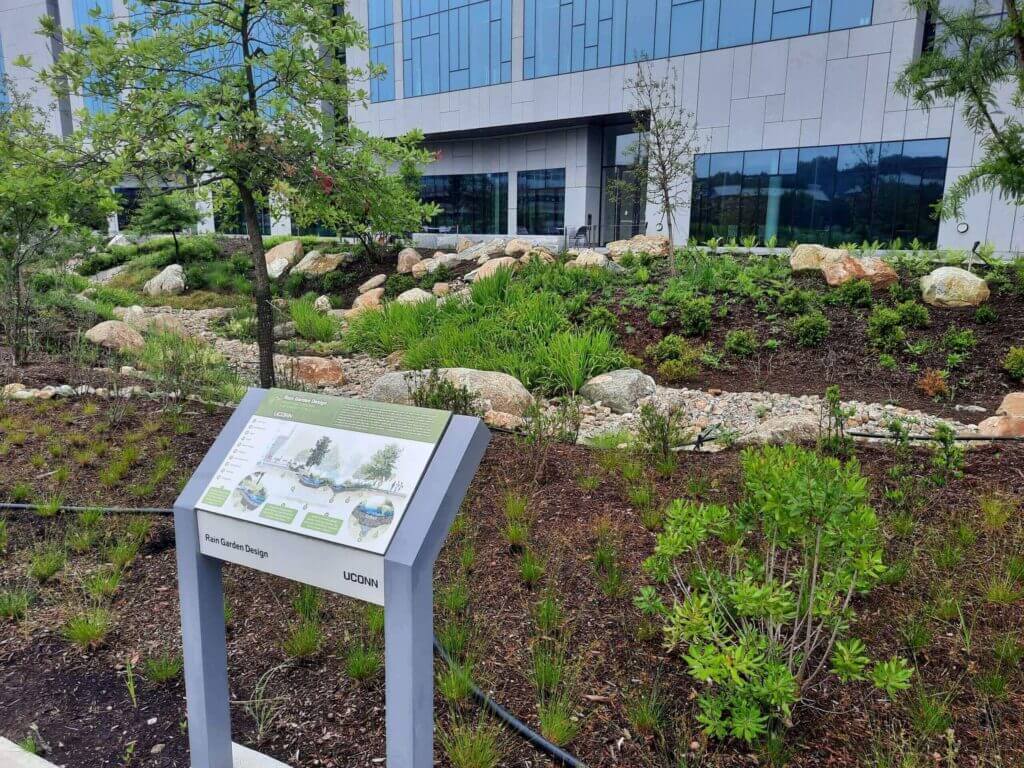
- Reduce impervious surfaces and associated impacts through green infrastructure and other techniques.
- Identify cross-boundary or watershed-level issues and opportunities for collaboration, studies, and projects.
- Work with other partners to advocate for innovative septic systems in Connecticut.
- Help municipalities implement stormwater (MS4) requirements.
- Actively support and urge progress on regional projects aimed at improving water quality.
Strategy 3: Protect and enhance terrestrial habitats.
- Avoid irreversible impacts to unique habitats and landscapes in the Region, such as traprock ridges and the Atlantic White Cedar Forest.
- Minimize fragmentation of larger intact forest and overall loss of tree cover.
- Increase small-scale neighborhood level greenery and habitat including in the Region’s denser neighborhoods.
- Support the creation or remediation of habitat including urban wooded areas and wetlands, and meadows throughout the Region.
Strategy 4: Balance water supply with ecosystem considerations.
Encourage multi-jurisdictional planning for source protection, interconnections, and the identification of future water supplies.
- Help municipalities integrate water supply planning considerations into POCDs.
- Ensure that the development and expansion of sources and interconnections have minimal environmental impact.
2. Cultivate spaces that connect people to nature and their community.
Strategy 1: Promote open space as a community, cultural, economic, and health asset, in addition to its common use for protecting natural resources.
- Permanently protect natural features and resources that are important to the region and state and that help achieve resiliency goals.
- Provide smaller-scale pocket parks and gardens.
- Showcase and connect to the region’s open spaces.
- Ensure that everyone in the region can access parks and open space.
- Support municipalities with open space stewardship.
Strategy 2: Connect the region’s open space through a regional greenway system.
- Promote the CT River and its tributaries as the region’s greenway “spine.”
- Implement linear bikeways and pathways that connect open space.
- Identify key natural or wildlife corridors that connect the region’s natural areas and encourage preservation as open space.
Strategy 3: Integrate natural features (biophilic concepts) into development.
- Assist our communities in integrating biophilic concepts in local plans and policies and provide model zoning regulations.
- Integrate nature-based designs into transportation and complete street projects.
- Prioritize sustainable design and reuse options in brownfields redevelopment.
3. Reduce regional gas emissions and adapt to climate change.
- Work with municipalities to identify priorities and seek funding to implement them.
- Actively showcase successfully implemented projects to educate and motivate CRCOG communities to take on similar initiatives.
- Promote increased local participation in the siting of renewable energy sources.
- Reduce transportation emissions.
- Encourage municipalities to consider the connections between land use and emissions.
- Provide guidance to municipalities on state mandates that require the accommodation of new energy sources and climate friendly infrastructure.
- Work with partners to help CRCOG municipalities address climate change in local POCDs.
- Help find funding to implement projects.
- Explore the potential of climate migration and its implications.
- Support state waste management efforts, including CCSMM.
- Aid local efforts at waste reduction.
- Identify cross-boundary and regional waste reduction programs.
- Ingrain the concept of a Circular Economy into aspects of CRCOG’s wok including work on solid waste.
- Work with existing environmental justice groups at the state and local level.
- Incorporate distributive, procedural, contextual, and corrective equity into regional climate efforts.
- Develop metrics to measure progress.
4. Improve the resiliency of the region.
- Use data to enhance resiliency.
- Use scenario planning to explore and understand future unknowns.
- Share staff regionally to avoid gaps in service provisions.
- Support diversification of the region’s energy sources and increase redundancy.
- Ensure that future development and infrastructure are located away from vulnerable, flood prone areas and built in ways to withstand hazards.
- Increase awareness and use of more comprehensive lifecycle cost analysis which accounts for disruptions due to hazards.
- Promote the creation of resilience hubs.
- Support additional research and educational efforts on impacts to private infrastructure, such as septic systems and private wells.
- Identify key partners that are connected to and trusted by the region’s marginalized and vulnerable residents.
- Support investment in and cooperation among regional entities that are most critical during a disruption.
5. Support a sustainable and equitable regional food system.
- Promote tools and programs to permanently preserve farmland for agricultural use.
- Support programs that keep farmland in agricultural use.
- Discourage the conversion of land with prime agricultural soils to non-farm uses.
- Encourage the expansion of allowable uses on farms.
- Encourage farm-friendly zoning regulations.
- Understand the unique barriers faced by generational family farms.
- Encourage municipalities to allow vacant lots to be used for agricultural and agricultural education uses.
- Encourage municipalities to amend zoning regulations to allow for emerging approaches to growing in built areas.
- Improve the viability of urban farming.
- Support programs that enhance opportunities for minority farmers.
- Support the creation and expansion of places for innovation such as regional shared kitchens, share production spaces, and incubator farms.
- Connect low and moderate income households to locally grown food.
- Work with non-profits and agricultural producers to explore a regional food hub concept.
- Support efforts to reduce the environmental impacts of farming operations.
- Work with municipalities on reducing the amount of food in the waste stream.
Develop A Competitive & Inclusive Regional Economy
The region hosts over 577,000 jobs across many industries, including at major corporations, small businesses, and higher education institutions. However, the sluggish recovery from the 2008 recession and then the shock of the COVID-19 pandemic, have resulted in a regional and state economy that lags behind the nation. Slow job growth, workforce readiness gaps, housing costs, and workforce retention are some of the challenges impacting the region’s economic competitiveness. The plan aligns with key strategies from our Comprehensive Economic Development Strategy to enhance economic resilience, equity, and competitiveness.
The plan also recognizes the critical role that Hartford, as the Capital city, must play in the regional economy, with a goal of revitalizing Hartford as a vibrant, 24/7 city. The plan also recognizes that rural economic development is another key component of a strong regional economy and will require strategic infrastructure investment in those communities. The overall vision is to create an inclusive, innovative, and resilient economy that benefits all communities in the region.
1. Build regional economic development capacity and support.
- Restructure the CEDS Implementation Committee.
- Develop and incorporate measurable outcomes to assess the impact of implementation.
- Support the State’s economic planning efforts, capitalizing on synergies where regional approaches would be beneficial for our towns.
- Reactivate the Sustainable Knowledge Corridor collaboration.
- Fully utilize our status as an officially designated EDD.
- Create a dedicated position at CRCOG to coordinate economic development activities.
- Promote diversity in land uses as a means of enhancing resilience.
- Encourage flexibility in land use regulations so that businesses can quickly respond and adjust when a disruption occurs.
- Conduct a study on municipal tax incentive programs in the region.
- Continue to operate, enhance, and market the MetroHartford Brownfields Program.
- Expand the current Targeted Brownfields Inventory.
- Partner with and support local municipalities, organizations and private developers to remediate and redevelop brownfields sites.
- Encourage infill development.
2. Create a 24/7 Capital City.
- Complete a study to identify and prioritize office buildings in the Downtown that are best suited for conversion to residential uses.
- Support the creation of a grocery store in the downtown.
- Build on prior CRCOG anchor institution studies to assist the City with its goal to convert anchor institution employees to residents.
- Expand CTfastrak hours to allow easier access to evening events.
- Support and expand the CRDA efforts for entertainment and sports facilities.
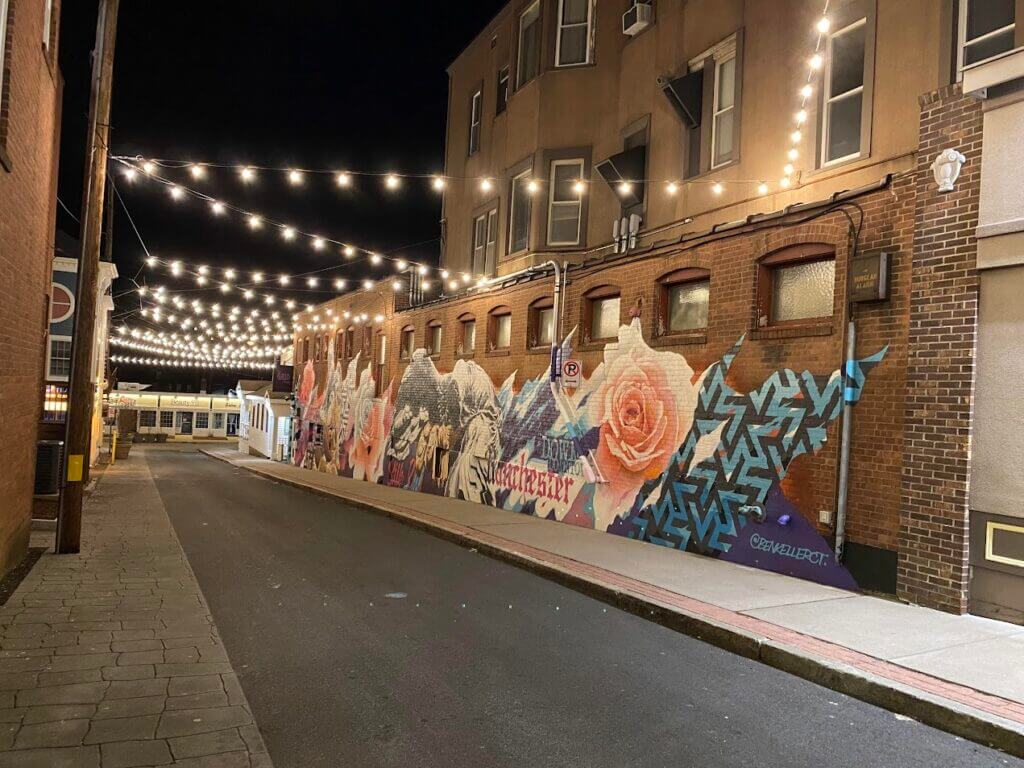
- Invest in the power of “fun”, placemaking, and the importance of third places to retain young adults and fuel social and economic prosperity.
- Make Hartford’s commercial property tax rate more competitive.
- Continue efforts to re-establish and expand waterfront access.
- Adopt a regional brand.
- Program “sister city” events.
3. Reimagine underutilized commercial districts as vibrant destinations.
- Support office to residential conversions where viable.
- Support office conversions that combine work and living space needs.
- Proactively identify, regulate, and solicit alternative uses for underutilized office space.
- Prepare malls and legacy commercial corridors for the changing retail landscape.
- Support programs to help small retail / restaurant / service businesses to locate in the adapted space.
4. Invest in the power of "fun", placemaking, and third places.
- Assess and amend zoning regulations that facilitate youth attraction and retention.
- Learn from zoning regulations from recognized successful, thriving locations.
- Work with municipalities to incorporate inclusive design into place making initiatives, while limiting hostile, exclusionary or defensive design within the region as a whole.
- Develop a regional placemaking-based youth and young adult retention strategy.
- Develop and cultivate relationships with entertainment-focused entrepreneurs and businesses looking to locate or expand within the region.
- Support cultural and artist community spaces.
- Advocate for increased funding and capacity at the state level for marketing and tourism within the region.
- Develop a regional strategy for creating more third places.
- Fund third-place development.
- Form partnerships focused on third-place development.
5. Support economic development in the region’s rural communities.
- Support development in existing rural village centers.
- Assist municipalities in updating land use regulations for village centers.
- Strategically embrace the power of outdoor recreation as an economic engine.
- Identify infrastructure barriers in rural communities.
- Actively coordinate with DOT and the region’s rural communities to overcome potential barriers to commercial development on state routes.
6. Ensure growth occurs in areas with adequate utilities.
- Work with local officials and utility providers to encourage the development of an infrastructure system that meets desired local and regional growth patterns.
- Encourage communication between town departments to ensure that planning efforts align with both pipeline and plant capacity.
- Discourage the joint extension of sewer and water service into unserved rural areas, except for extensions scaled to serve areas planned for significant commercial or industrial development.
- Work with developers and town officials to consider smaller, onsite wastewater treatment systems that would allow for cluster or village residential development at selected locations not served by public utilities.
- Advocate for a quicker, streamlined state approval process for septic systems.
7. Ensure that our archeological and historic resources are preserved and celebrated.
- Adaptively reuse historic structure and sites.
- Prevent the loss and destruction of historic resources.
- Promote context sensitive zoning for infill development in historic areas.
- Encourage cities and towns to require archaeological reviews in land use regulations.
- Promote the region’s historical resources.
- Identify examples of comprehensive, collective historical storytelling at a regional scale.
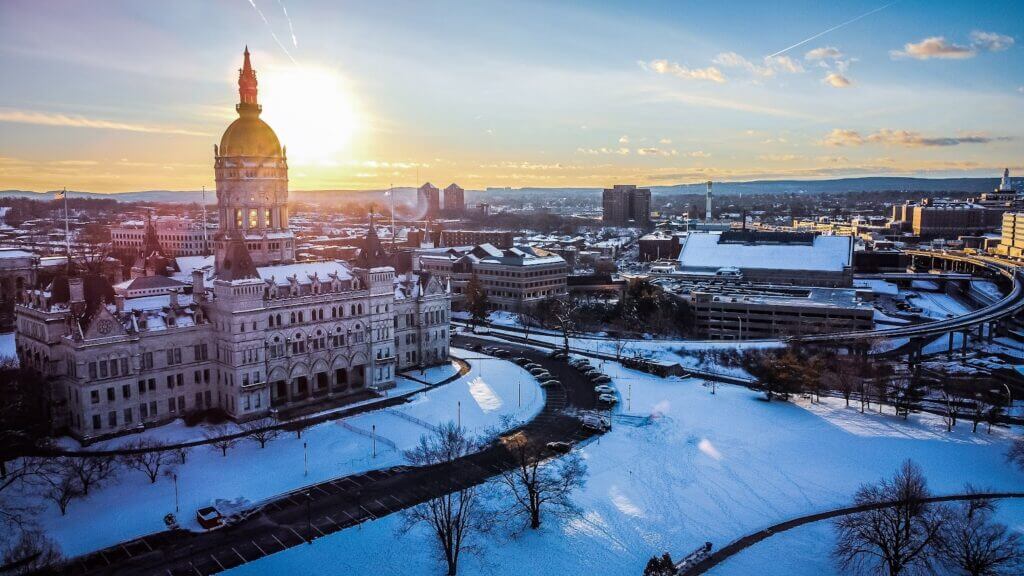
Reform Outdated "Steady Habits" in Our Institutions & Governance
The region consists of 38 municipalities, each operating and making decisions independently. This fragmented system can lead to disparities in resources capacities, and hinder regional cooperation, service sharing, and innovation. Additional challenges include a heavy reliance on property taxes, inefficient public service delivery, and difficulty engaging with residents.
The plan calls for reforms to improve shared municipal services, advocate for state-level policy changes, and explore regional approaches. Ultimately, the plan seeks to balance local decision-making with regional cooperation, ensuring more efficient, equitable, and fiscally sustainable governance for Connecticut’s future.
1. Improve public service delivery through robust shared services and partnerships.
- Conduct a comprehensive review of existing formal and informal examples of shared services.
- Identify and apply for additional Regional Performance Incentive Program (RPIP) grants.
- Review and advocate for the reform of state statutes impeding regional cooperation.
- Supplement and support State efforts on service sharing and consolidation.
- Support the provision of robust incentives for service sharing and consolidation.
- Leverage CRCOG’s leadership role in service sharing to provide feedback on statutory improvements.
- Explore filling state-required local functions at the inter-municipal or regional level.
2. Create fiscally sustainable & equitable systems for funding public services.
- Consider allowing municipalities to diversify local revenue sources.
- Advocate for the State shouldering a larger portion of K-12 special education funding.
- Formalize the consideration of a municipal “needs-capacity gap.”
- Reform the State’s Payment In-Lieu of Taxes (PILOT) system.
- Require entities exempt from the property tax to pay for specific municipal services such as utilities and other non-education related services.
- Explore refundable property tax credits or expand existing tax relief programs to make the overall tax burden more progressive.
3. Enhance the operational efficiency and effectiveness of local government operations.
- Provide support and undertake studies in capacity-building.
- Help municipalities with operational best practices including succession planning.
- Continue to advocate for collective municipal interests at the state level through CRCOG’s Legislative Committee/Policy Board.
- Encourage the creation of inter-municipal boards and commissions.
- The State should mandate and implement a robust standardization effort to assist policymakers charged with making critical decisions.
- CRCOG should continue to build out its GIS and data capabilities.
4. Increase equitable community participation in local decision-making.
- Provide resources to municipalities on how to conduct participatory budgeting.
- Proactively help build stronger relationships between municipal government and community members.
- Encourage municipalities to proactively recruit a diverse range of residents for board and commission vacancies.
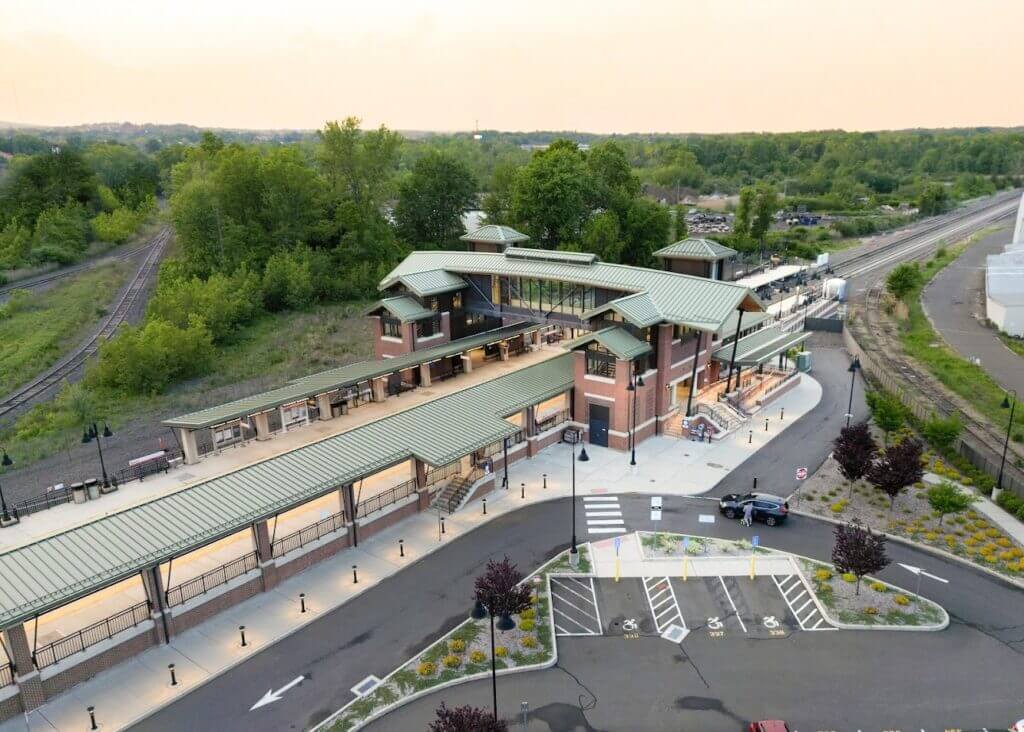
Invest in transportation options for every journey
The region’s robust transportation network is an indispensable system that connects us all, but it essentially requires a car – 67% of the POCD survey respondents require a car to get to everyday destinations. It is readily evident how the design and development of our land uses reflect our car-dependent network. Additionally, with nearly 40% of the state’s greenhouse gases coming from transportation, it underscores the need for transportation policies that expand mobility choices.
The plan calls for strategic investments in multimodal transportation and calls for increased recognition of the role that our streets play in the overall quality of life for residents in the region. It also aligns with CRCOG’s more in-depth Metropolitan Transportation Plan (MTP).
1. Align transportation investments with land use, housing, and other development and placemaking goals.
- Prioritize transportation investments that support land use goals.
- Maintain and implement CRCOG’s Complete Streets Policy and Plan.
- Track development in TOD corridors to assess growth and return on investment.
- Discourage non-transit dependent/supported uses in TOD areas.
- Continue conducting studies on the freight transportation system to maintain and improve efficient, sustainable, and equitable movement of goods, including for e-commerce and last mile deliveries.
- Preserve freight adjacent land for freight dependent uses.
- Support and advocate for the actions contained within the Greater Hartford Mobility Study (GHMS).
- Transform car-centric commercial corridors.
2. Expand transportation options for all users and purposes.
Strategy 1: Make transit a convenient, attractive, and viable transportation choice.
- Invest in frequent, fast, and accessible transit options.
- Support and advocate for transit stops that demonstrate a commitment to investing in transit infrastructure.
- Develop more comprehensive service for transit that serves critical resources such as grocery stores, medical centers, and employment hubs.
- Proactively plan for transit dependent older populations and transit supportive younger populations by providing resources and services for these populations.
- Pursue multimodal and first-last mile connections from major transit hubs and corridors.
Strategy 2: Provide safe, appealing, and accessible walking and bicycling infrastructure.
- Identify opportunities for active transportation infrastructure to connect with/create destinations for recreational, social, and placemaking purposes alongside utility destinations.
- Identify key regional locations with car centric infrastructure where bike and pedestrian improvements can be planned and implemented such as commercial arterials, strip malls and turnpikes.
- Identify funding sources and programming to create protected bicycle lanes through physical barriers such as raised curb-buffers, street parking, and channelized islands at intersections.
Strategy 3: Enhance and expand regional and long-distance transportation services for longer journeys.
- Expand and improve rail service.
- Better connect Bradley International Airport to transit.
Strategy 4: Capitalize on transportation innovations that make it easier and safer to move around the region.
- Continue to explore a regional micromobility system.
- Monitor the CTDOT pilot microtransit program.
- Seek pilot projects to test innovative approaches.
3. Address the burdens and costs of transportation.
- Reduce single-occupancy vehicle trips.
- Reduce air pollution by reducing congestion and idling.
- Reduce vehicle emissions.
- Green our transportation infrastructure.
- Prioritize the inclusion of safety improvements, particularly for vulnerable roadway users, into transportation projects, plans, and studies.
- Promote transportation engineering practices that place people first.
- Work alongside communities when identifying transportation barriers and opportunities to ensure community buy-in and comfort.
- Distribute transportation resources equitably across the region to remedy the disproportionate effects of persistent infrastructural injustices.
- Continue offering transportation programs and policies for transportation improvements in disadvantaged communities.
- Seek creative options for financing transit.
- Promote adequate funding for infrastructure maintenance and repair.
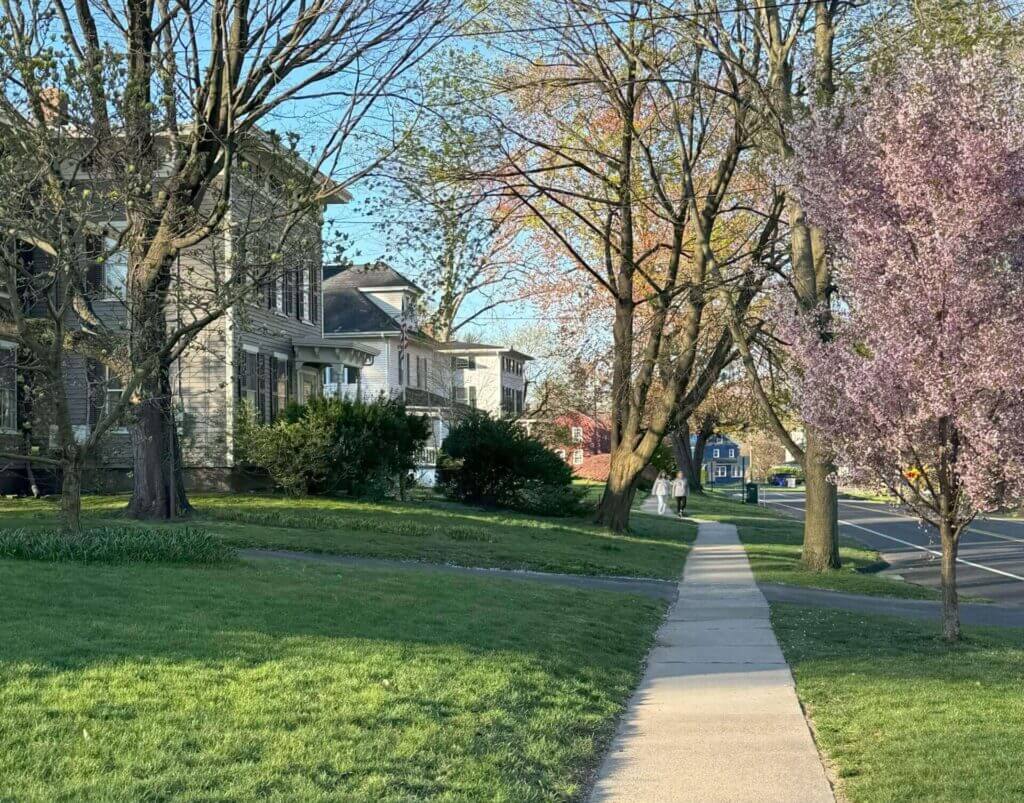
Expand & diversify the region's housing stock
Connecticut ranks 49th in the nation for new housing production and nearly one-third of households in the region struggle with housing costs. The need for action is urgent and the Plan outlines regional approaches to the pressing challenges of housing affordability and availability.
A two-pronged approach to overcome these hurdles – preserving and revitalizing existing homes and neighborhoods while accelerating new housing production – can ensure that people of all incomes, backgrounds, and life stages have access to safe, affordable homes. Housing markets are regional and solutions require cooperative, cross-boundary approaches. The plan promotes housing opportunities in the most suitable areas in the region, while balancing protection of critical natural resources.
The region cannot afford to maintain the status quo. Expanding housing options is about more than affordability—it is about community vibrancy, economic vitality, and the overall well-being of current and future generations.
1. Preserve the region's housing stock.
- Support the efforts of nonprofit and for-profit developers to rehabilitate and preserve distressed rental properties and to provide for mixed-income developments.
- Support increased funding to update, upgrade, and modernize older housing units and apartment buildings.
- Champion reinvestment programs and projects that improve livability of the region’s urban neighborhoods.
- Identify best practices for minimizing displacement during neighborhood reinvestment programs.
- Monitor trends in corporations purchasing apartment buildings in the region and any resulting rent increases.
- Support the work by others to provide support to cost-burdened renters.
- Explore and potentially advise on the effectiveness of rent control/stabilization and other measures to prevent displacement.
2. Diversify the region's housing stock.
Strategy 1: Increase density compatible with neighborhood context.
- Support efforts to increase the critical mass of housing density in the region’s downtowns.
- Support moderate density in areas with infrastructure, proximate to transit options, and near or within town centers.
- Encourage light touch density (aka “missing middle”) in areas with supporting infrastructure.
- Encourage “hidden” density, where units are added in ways that are not necessarily detectable.
Strategy 2: Encourage innovative housing models.
- Provide guidance to municipalities on needs and options for alternative housing communities.
Strategy 3: Explore innovative housing productions.
- Stay apprised of emerging trends in housing construction including tiny homes and prefabricated apartment units and houses.
Strategy 4: Remove roadblocks to housing production.
- Bring together stakeholders, including non-traditional stakeholders, on a regular basis to review progress, identify emerging needs and trends, and adjust strategies.
- Explore targeted expansion of water and sewer infrastructure in rural areas to meet the need for affordable housing and new housing options.
- Learn from and engage with homebuilders, small-scale developers and large-scale developers.
- Explore mechanisms to reduce financial burdens from new housing development.
3. Increase affordable housing in the region.
Strategy 1: Provide support to member municipalities to increase affordable units and administer affordable housing programs.
- Develop guidance on inclusionary zoning percentages that address market variations in the region.
- Encourage municipalities to remove or reduce regulatory barriers to creating affordable housing.
- Work with municipalities to identify gaps in local resources, expertise, and staffing when it comes to creating and administering housing programs and determine where regional assistance might be reasonable and feasible.
- Take a leadership role in supporting municipalities with their fair-share allotments, after OPM has completed its allocations.
Strategy 2: Seek regional approaches to producing affordable units.
- Develop a Regional Housing Strategy to conduct a deeper analysis of housing trends, needs and gaps in the region and to create tailored solutions and programs to help municipalities.
- Explore the feasibility of regional publicly developed affordable housing.
- Leverage the business community in promoting the importance of having a robust, diverse, and affordable housing stock.
Strategy 3: Actively work to preserve affordability of units with expiring deed restrictions.
- Provide data to municipalities on the anticipated expiration of affordable units.
- Identify those units at highest risk of converting to market rate units.
- Work with municipalities and stakeholders to identify tools for preserving those units that will be expiring and are at highest risk for conversion to market rate units.
Strategy 4: Encourage preservation of naturally occurring affordable units.
- Explore mechanisms to preserve naturally occurring affordable housing units.
Strategy 5: Promote and support programs that make homeownership achievable for low- and moderate-income households.
- Support the work of the State and non-profits.
4. Build housing adjacent to transit.
Strategy 1: Encourage investment in TOD.
- Encourage communities to support and plan for housing near major transit facilities.
- Support state investments in TOD areas.
Strategy 2: Encourage the expansion of transit services to better meet the needs of households in TOD areas.
- This strategy represents the intersection of Housing and Transportation to create accessible and livable communities. Refer to Transportation Actions.
5. Provide the region's vulnerable populations with a safe place to live.
- Examine models used in other states and regions to provide immediate, interim housing.
- Support the work of non-profits to provide supportive housing in all parts of the region.
- Encourage municipalities to provide accessible and affordable housing options, particularly in areas with higher percentages of low-income elderly and elderly with disabilities.
- Support funding programs for accessibility and modifications.
POCD Policy Maps
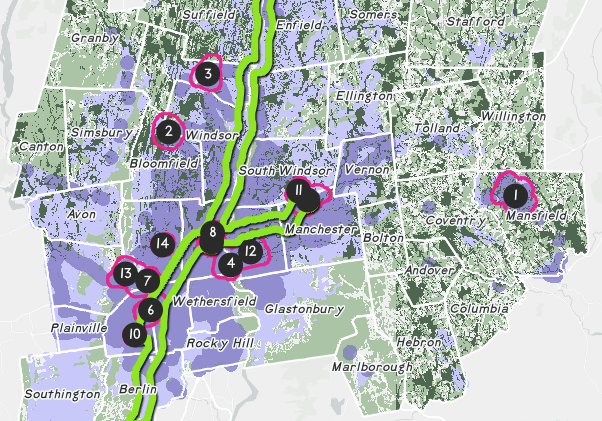
This map, illustrates the vision for the region’s future by identifying areas most suitable for growth and development and areas that warrant preservation. Along with the text of the Plan, this map is intended to provide general guidance to CRCOG, municipalities, and state agencies. The map can be used to support, encourage, and guide further investment in areas most suitable for development.
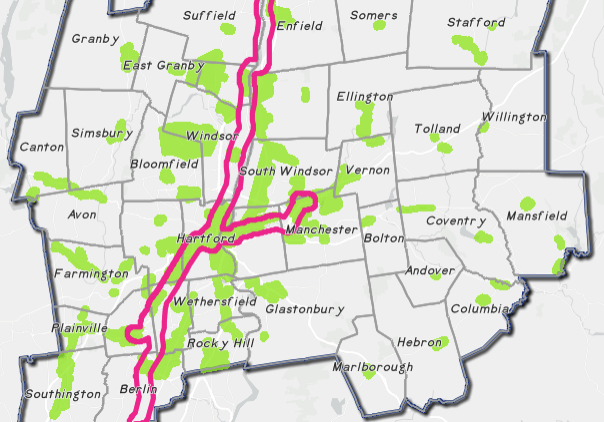
Municipal Focus Areas are areas generally identified by each municipality as key development areas. The highlighted areas are locations that either serve as regional or local hubs for communities. These hubs are most likely where development would be most appropriate and see increased returns on investment.
Previous Plan (2014)