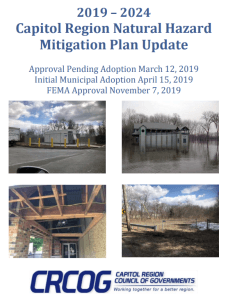
Hazard Mitigation & Climate Adaptation Plan
Overview
The CRCOG Regional Hazard Mitigation and Climate Adaptation Plan (HMCAP) identifies natural hazards and impacts from climate change that pose harm to safety and health, assesses vulnerabilities, and outlines mitigation strategies to reduce the loss of life and property, economic disruptions, and the costs of post-disaster recovery. Having an approved plan allows municipalities to access FEMA Hazard Mitigation assistance in the event of a disaster and makes them eligible to apply for certain FEMA grants.
Local Annex Updates
If you are interested in updating your municipal annex, please reach out to Sonya Carrizales to obtain the Word version of your annex from CRCOG. Submit the amended annex and the Annex Amendment Request Form linked below to CRCOG, who will then determine if the amendments require review by FEMA (see Appendix D in FEMA guidebook). This form should be filled out by the Local Coordinator (see page 2 in Regional HMCAP); if your Local Coordinator has changed, please let us know.
Read the Plan Here
Introduction to the Plan
A five-year Comprehensive Economic Development Strategy (CEDS) for the Hartford, Connecticut region was prepared. Titled Metro Hartford Future, Accelerating Shared, and Sustained Economic Growth, it portrayed the budding optimism of a community that would build its future on a foundation of inclusive economic growth.
Access the full plan as a pdf here.
Regional Plan
Municipal Annexes
- Introduction
- Andover
- Avon
- Berlin
- Bloomfield
- Bolton
- Canton
- Columbia
- Coventry
- East Granby
- East Hartford
- East Windsor
- Ellington
- Enfield
- Farmington
- Glastonbury
- Granby
- Hartford
- Hebron
- Manchester
- Mansfield
- Marlborough
- New Britain
- Newington
- Plainville
- Rocky Hill
- Simsbury
- Somers
- South Windsor
- Southington
- Stafford
- Suffield
- Tolland
- Vernon
- West Hartford
- Wethersfield
- Willington
- Windsor
- Windsor Locks
Appendices
- Appendix A – Local Meeting Materials
- Appendix B – Regional Workshop Materials
- Appendix C – Utility and lifeline meeting materials
- Appendix D – Public Meeting Materials
- Appendix E – Internet based survey results
- Appendix F – Copies of communications
- Appendix G – Draft plan presentation materials
- Appendix H – Templates for annual emails to jurisdictions and organizations that serve socially vulnerable populations
- Appendix I – Worksheet Document Simple Updates and Amendments
- See the CRCOG HMCAP Annex Amendment Request Form
- Appendix J – Action Monitoring Form
- Appendix K – CIRCA Climate Change Fact Sheets
- Appendix L – DCRF Fact Sheet
- Appendix M – Active Mitigation Strategies and Actions 2024-2029
- Appendix N – 2019 HMP Planning Process
- Appendix O – HAZUS Results
- Appendix P – Adoption resolutions
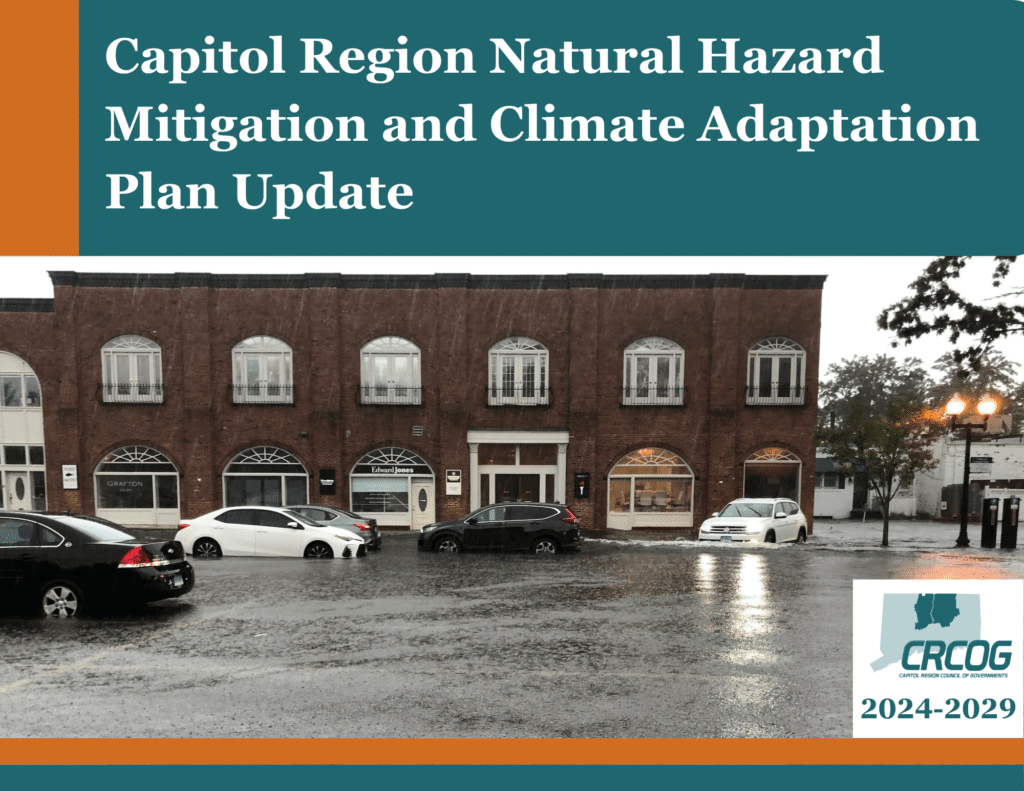
Hazards and Climate Drivers Identified
A Natural Hazard is an extreme natural event that poses a risk to people, infrastructure, natural ecosystems, and community resources.
The Capitol Region is vulnerable to several natural hazards. Flooding, tropical and winter storms, and high wind events occur most frequently with enough severity to cause loss of life or property. The Hazard Mitigation and Climate Adaptation Plan includes all hazards profiled and analyzed in the 2019 update with the addition of extreme heat.
Climate change will likely exacerbate natural hazards, posing higher risk to lives and property in the region. The Plan organizes all identified hazards by Climate Driver to examine how climate change might worsen each hazard. Scroll down to learn more about how climate drivers may affect hurricanes, wildfires, and other identified natural hazards. Click the images on the right to explore additional hazard maps, data, and resources.
Extreme Heat
As global temperatures rise, extreme heat and heat wave events can impact vulnerable populations, increase vector borne diseases, and exacerbate droughts and wildfires.
Wildfires
Some communities throughout the State have experienced wildfires in the past. A wildfire can be ignited from several sources, and as extreme heat and drought events become more frequent, the risk for wildfires in vegetated regions also increases.
Riverine and Pluvial Floods
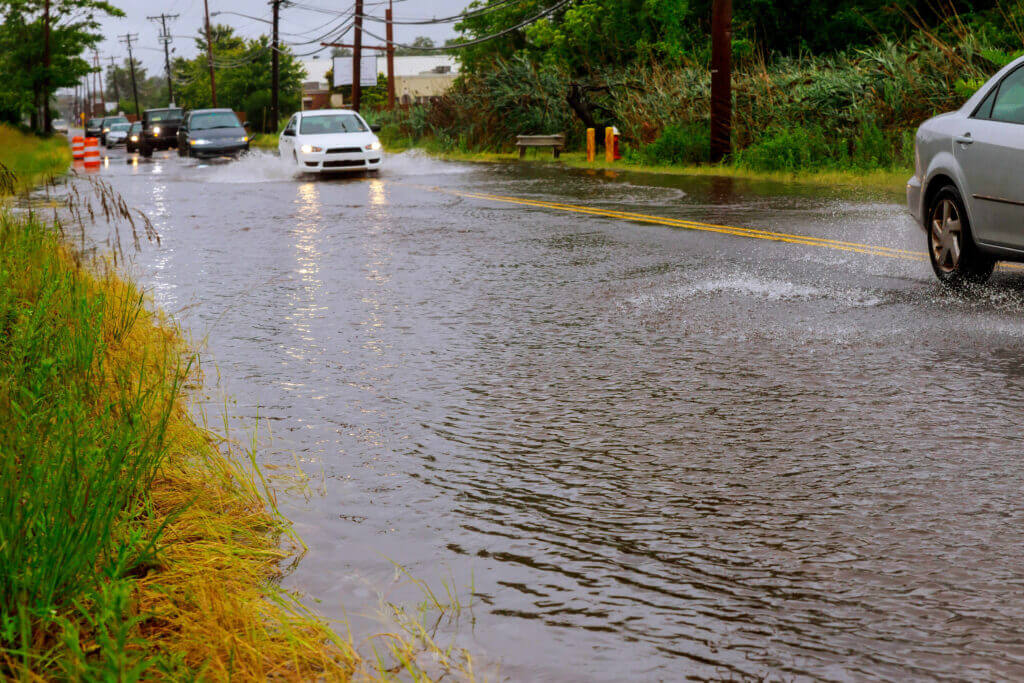
As precipitation frequency and intensity changes, both riverine and pluvial (drainage) flooding incidents may become more frequent. As more precipitation falls during a single event, flood levels may increase and drainage challenges may become increasingly more frequent.
Drought
Although precipitation levels are projected to increase, it is expected that the time between significant precipitation events may also increase, leading to flashy or extended periods of drought.
Dam Failures
Increased precipitation levels may result in stressing dam infrastructure along rivers throughout the region. Although a major dam failure is unlikely to happen, increased precipitation or rapid snow melt in spring could lead to dams overtopping or becoming compromised.
Connecticut River Tidal Change
Tidal change along the Connecticut River may be exacerbated by climate change as sea levels rise, tidal ranges increase, and storm surge becomes higher and potentially more intense.
Hurricanes and Tropical Storms
Climate change projections have indicated that wind speeds and storm intensity may increase as global temperatures rise and may also result in more intense rainfall during storms due to the warmer air holding more water vapor.
Tornadoes and High Winds
While predicting how climate change will impact tornado and wind events is not as straightforward as other natural events, it is understood that the “ingredients” to develop these events are becoming more frequent and widespread. With warmer, moist air, and ultimately a more frequent unstable atmosphere, supercell thunderstorms occur and result in tornadoes and extreme wind events.
Severe Winter Storms
Winter storms in the Northeast are expected to increase in intensity, while becoming less frequent. Storms will still be capable of producing extreme amounts of snow, however, by mid-century it is expected many of these events will begin to produce more rain than snow.
Earthquakes
Though they are not common, earthquakes can in fact be felt throughout the CRCOG region. Smaller magnitude events have originated in the state, and some communities throughout Connecticut have felt the shaking from larger events that originate hundreds of miles away.
HMCAP Combined Mitigation Goals
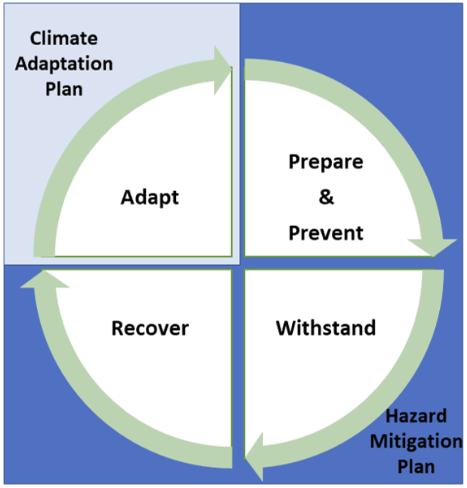
CRCOG collaborated with the Connecticut Institute for Resilience and Climate Adaptation (CIRCA) to align Resilient Connecticut goals with the regional Hazard Mitigation Plan Update, resulting in a combined Hazard Mitigation and Climate Adaptation Plan (“HMCAP”). The alignment of planning efforts and adoption of this combined Hazard Mitigation and Climate Adaptation Plan positions CRCOG and its member municipalities to examine the nexus between local hazard mitigation, climate adaptation, and resilience efforts and contribute to the State’s resilience project pipeline.
2019 Goals Included in Plan Update
Goal 1: Minimize the impact of natural hazards on physical buildings and infrastructure:
Mitigation actions that address this goal are intended to protect or adapt structures and infrastructures from the physical impacts of hazards. Actions might include floodproofing structures, elevating structures above flood elevations, constructing fire breaks, or assessing wind-load capacities of critical facilities.
Goal 2: Ensure municipal codes and regulations support hazard mitigation:
Mitigation actions that address this goal focus on strengthening the regulatory frameworks of communities to avoid the creation or exacerbation of hazardous conditions. Actions might include requiring buildings be elevated above the flood elevation or requiring new developments have multiple modes of egress.
Goal 3: Improve institutional awareness and understanding of natural hazard impacts and mitigation within municipal governments and other decision-making bodies:
Mitigation actions that address this goal focus on education and training of municipal or regional staff, first responders, and elected officials.
Goal 4: Increase the use of natural, “green,” or “soft” hazard mitigation measures such as open space preservation and green infrastructure:
Mitigation actions that address this goal focus on utilizing the beneficial functions of natural systems and features. Actions might include wetland protection, low impact development, and use of green infrastructure similar to recent actions in the City of Hartford.
Goal 5: Improve the resilience of local and regional utilities and infrastructure using strategies including adaptation, hardening, and creating redundancies:
Mitigation actions that address this goal focus on maintaining critical services through hazard events. Actions might include burying power lines, developing microgrids, or protecting a wastewater treatment plant.
Goal 6: Improve public outreach, education, and warning systems:
Mitigation actions that address this goal focus on educating and alerting the public. Actions may include sending informational mailers, providing information on the municipal website, or implementing a reverse 9-1-1 system.
Goal 7: Improve the emergency response capabilities of the region and its communities:
Mitigation actions that address this goal focus on developing a community’s ability to respond to a hazard event. Actions may include upgrading shelters or the Emergency Operations Center, reviewing evacuation routes, or improving the ability of emergency responders to communicate with one another during events.
Goal 8: Ensure community character and social equity are addressed in mitigation activities:
Mitigation actions that address this goal focus on protecting features of a community that may otherwise be overlooked when considering only the most critical features. Actions may include those that protect historic, cultural, and recreational resources or those that specifically address low-moderate income or underserved populations.
Goal 9: Minimize the economic impact of hazard damages:
Mitigation actions that address this goal focus on limiting economic impacts of damages that do occur regardless of actions taken to mitigate the physical impacts of the damages themselves. Actions may include educating landowners about flood insurance, joining CRS, improving the community CRS score, or setting up recovery funding mechanisms.
NEW Goals Added
Goal 1: Ensure that critical facilities are resilient, with special attention to shelters and cooling centers.
Goal 2: Address risks associated with extreme heat events, especially as they interact with other hazards.
Goal 3: Reduce flood and erosion risks by reducing vulnerabilities and consequences, even as climate change increases frequency and severity of floods.
Goal 4: Reduce losses from other hazards.
Goal 5: Invest in resilient corridors to ensure that people and services are accessible during floods and that development along corridors is resilient over the long term.
Resilient Connecticut 2.0
Partnered with CIRCA, CRCOG has executed Phase I and II of the Resilient Connecticut Program as part of the 2024 Hazard Mitigation Plan Update. Phase I was incorporated into the HMCAP itself, with the primary goal being to develop a resilience planning framework. Phase II of identifying Resilience Opportunity Areas (ROARs) through vulnerability assessments coincided with the HMCAP Update process. Following the 2024 HMCAP adoption, Phase III of developing location specific projects and site plans in currently underway. The two Resilient Connecticut projects in the CRCOG region that are advancing to Phase III include: 1) Resilient East Hartford and 2) Resilient Piper Brook – Newington/Berlin/New Britain. Click the buttons below for more information on the Resilient 2.0 program and projects in the Capitol Region.
2024 Plan Update StoryMap
Previous Plan (2019)